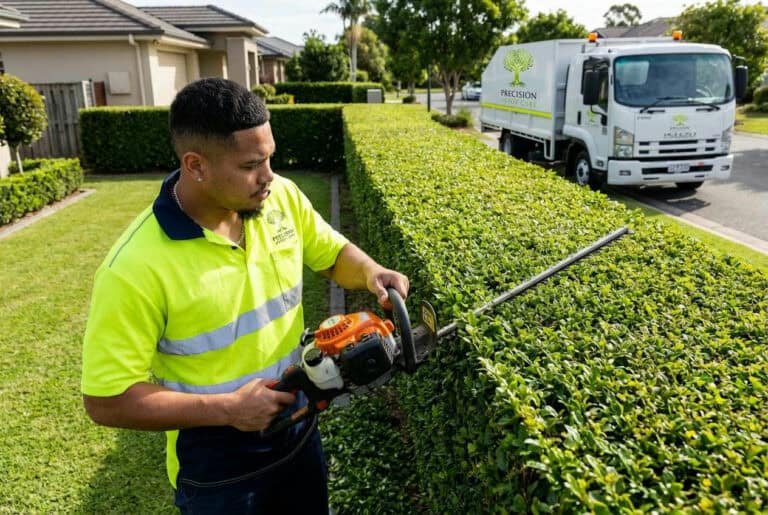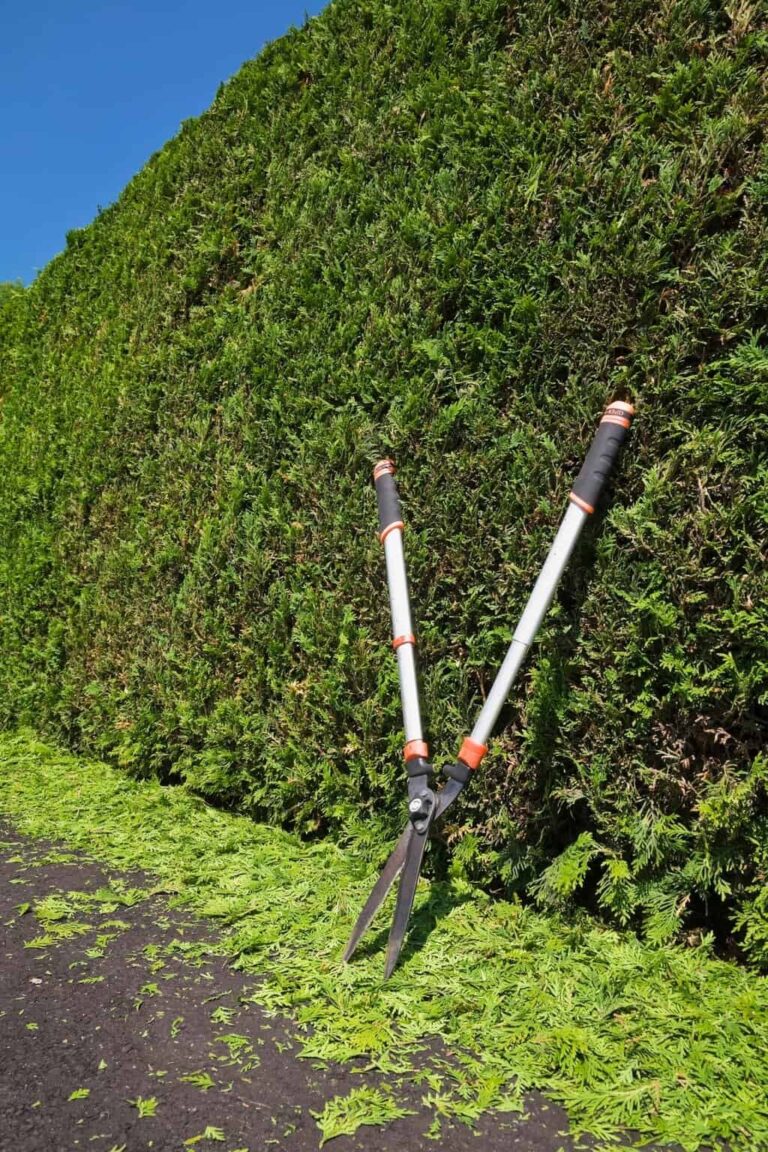
Melbourne’s climate suits a wide range of hedge plants, from fast-growing Photinia to classic English Box. Knowing which species you have is the first step to trimming and caring for it properly. This guide covers the most common hedge plants in Melbourne gardens, how fast each one grows, when to trim, and the most common problems.
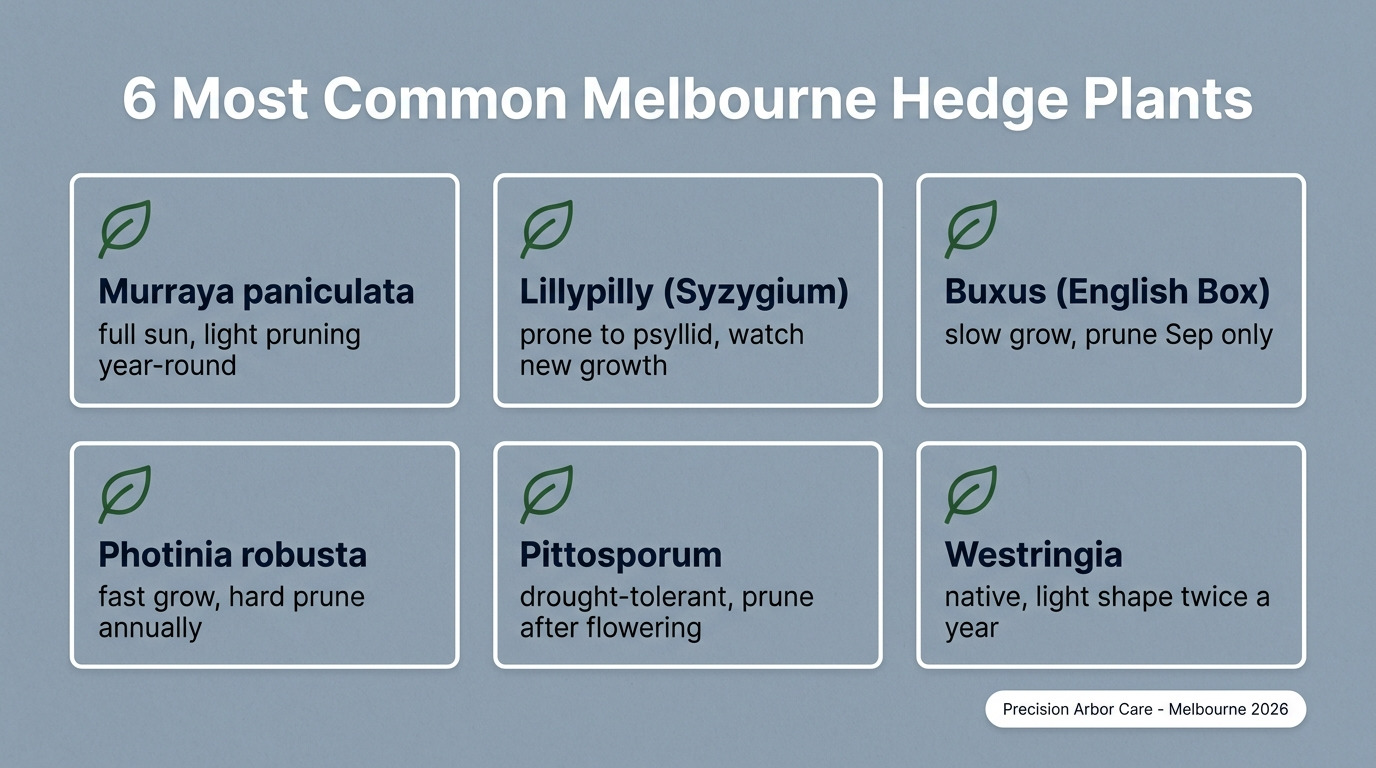
Photinia Robusta (Red Robin)
Photinia is one of the most popular hedges in Melbourne. It has glossy green leaves that turn bright red on new growth, giving the hedge a striking two-tone look in spring.
- Growth rate: Fast — up to 60cm per year
- Trimming frequency: 3 to 4 times per year
- Best trimming time: After new growth flush in spring, then mid-summer and autumn
- Common problems: Leaf spot fungal disease in damp areas; thinning base if not trimmed often enough
Photinia handles hard pruning well and regrows readily. Good for screening because it grows tall (up to 5 metres) and dense.
Lilly Pilly (Syzygium and Acmena species)
Lilly Pilly is an Australian native hedge that suits Melbourne gardens. It produces small white flowers and pink or purple berries. Several varieties are sold — “Resilience” and “Backyard Bliss” are popular for home hedges.
- Growth rate: Moderate to fast — 30 to 50cm per year
- Trimming frequency: 2 to 3 times per year
- Best trimming time: Spring and late summer
- Common problems: Psyllid damage causing bumpy, distorted leaves on older varieties (newer cultivars are resistant)
If you see lumpy growth on Lilly Pilly leaves, it is likely psyllids. Resistant varieties are available at most nurseries.
English Box (Buxus sempervirens)
English Box is the classic low formal hedge. It has small, dark green leaves and holds its shape very well.
- Growth rate: Slow — 10 to 20cm per year
- Trimming frequency: 1 to 2 times per year
- Best trimming time: Late spring and early autumn
- Common problems: Box Blight (fungal disease causing patchy die-back); slow to recover from over-pruning
Box is the right choice for low, defined hedges (up to 1 metre). For taller hedges, other species are faster and cheaper to grow.
Japanese Box (Buxus microphylla japonica)
Japanese Box is a faster-growing alternative to English Box with slightly larger leaves. It is more tolerant of Melbourne’s warm summers.
- Growth rate: Moderate — 20 to 30cm per year
- Trimming frequency: 2 times per year
- Best trimming time: Spring and late summer
- Common problems: Similar blight issues to English Box in humid conditions
Viburnum Tinus (Laurustinus)
A tough, fast-growing evergreen hedge with pink-white flower clusters in late winter. Great for screening because it grows densely and to about 3-4 metres.
- Growth rate: Fast — 40 to 60cm per year
- Trimming frequency: 2 to 3 times per year
- Best trimming time: After flowering in spring, then late summer
- Common problems: Thrips and aphids on new growth; mildew in damp spots
Murraya (Orange Jessamine)
Murraya has glossy green leaves and highly fragrant white flowers several times a year. Popular for both hedges and as a fragrant screen near outdoor living areas.
- Growth rate: Moderate — 30 to 50cm per year
- Trimming frequency: 2 to 3 times per year
- Best trimming time: After main flowering flush (avoid trimming too close to flower buds)
- Common problems: Root rot in waterlogged soil; sensitive to frost in Melbourne’s colder suburbs
Leighton Green Conifer (Cupressocyparis leylandii)
A fast-growing evergreen conifer used for tall screens and privacy hedges. It can reach 4 to 6 metres easily.
- Growth rate: Very fast — up to 1 metre per year
- Trimming frequency: 2 to 3 times per year
- Best trimming time: Spring and late summer
- Common problems: Will not regrow from bare old wood — never cut back to brown stems; gets out of control quickly if left untrimmed
Be careful with Leighton Green. Trim regularly to keep it in shape. If you cut too hard back into the old wood, you will have permanent brown patches.
Callistemon (Bottlebrush)
Australian native hedge with bright red, pink, or cream flowers. Tough, drought-tolerant, and attracts birds.
- Growth rate: Moderate — 20 to 40cm per year
- Trimming frequency: 1 to 2 times per year
- Best trimming time: Immediately after flowering
- Common problems: Can get leggy if not trimmed often enough; scale insects on stressed plants
Camellia
Camellia works as a hedge in semi-shaded spots. It has glossy leaves year-round and produces large pink, red, or white flowers in winter and early spring.
- Growth rate: Slow — 15 to 25cm per year
- Trimming frequency: 1 time per year
- Best trimming time: Right after flowering finishes
- Common problems: Leaf gall (bumpy pink leaves); sooty mould from aphids
General Care Tips for Any Hedge
No matter what species you have, follow these basics:
- Water deeply, not often. A slow soak once a week is better than daily splashing.
- Mulch every spring. A 5-10cm layer of mulch keeps roots cool and moist.
- Feed twice a year. Spring and autumn applications of a balanced fertiliser keep the hedge vigorous.
- Trim little and often. Regular light trims are better than occasional hard cuts. For more on this, see our guide on how often to trim your hedge.
- Keep the top narrower than the base. This lets light reach the lower leaves so the hedge stays full from top to bottom.
Not Sure What Hedge You Have?
If you have inherited a hedge with an unknown species, a qualified arborist can identify it and recommend the right care plan. Precision Arbor Care provides hedge assessment and trimming across Melbourne. Call Rob on 0410 266 708 or check out our hedge trimming services to book a visit.
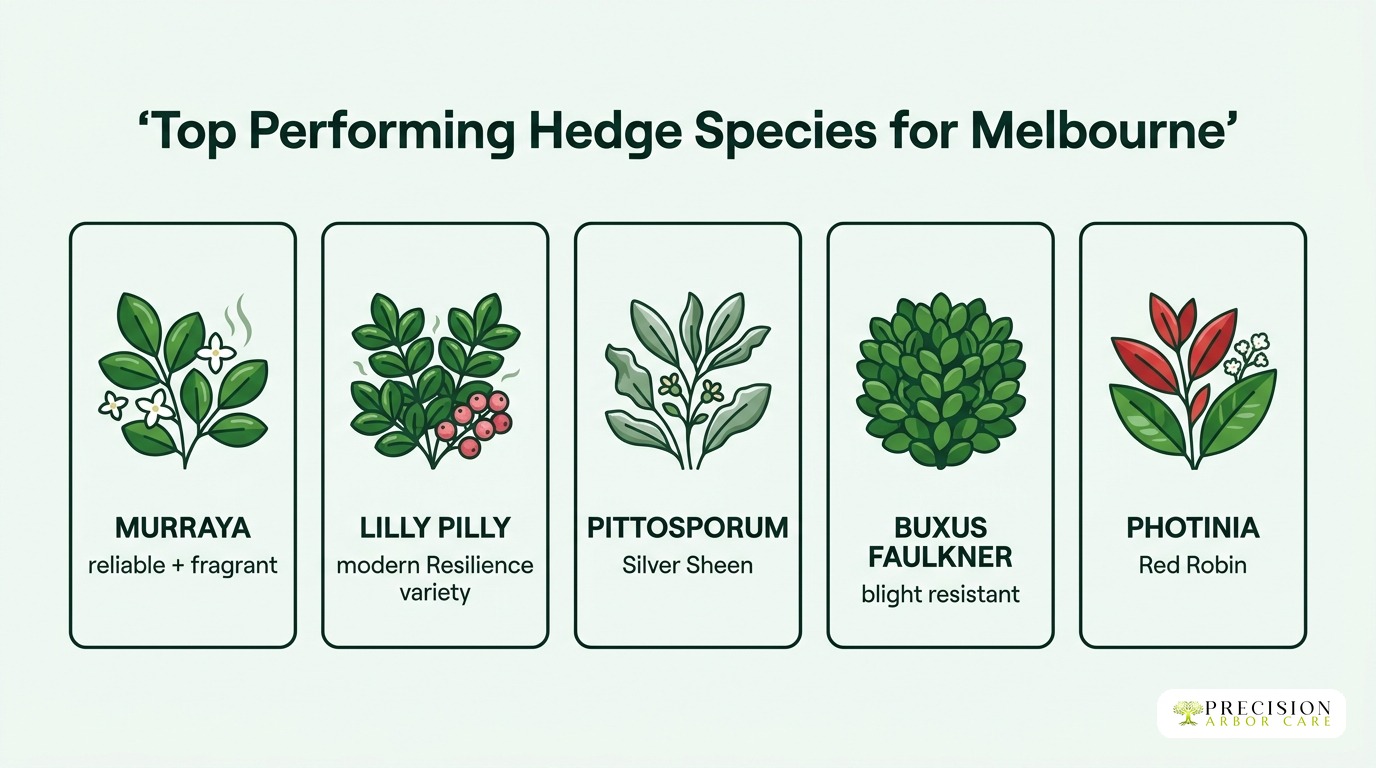
Best Hedge Species for Melbourne Conditions
- Murraya (Orange Jessamine)
- Lilly Pilly (modern varieties)
- Pittosporum ‘Silver Sheen’
- Buxus ‘Faulkner’
- Photinia ‘Red Robin’
- English Box (root rot in clay)
- Conifer ‘Leyland’ (death cycle)
- Bambusa (invasive runners)
- Olive (drops black mess)
- Acmena ‘Special’ (psyllid magnet)
Hedge Height by Species — Realistic Expectations
Three Species We Don’t Recommend Anymore
Based on the last 5 years of replanting calls and dieback patterns:
- English Box (Buxus sempervirens). Susceptible to Box blight, dies suddenly. Faulkner variety is the modern replacement.
- Leyland Cypress. Lifespan 25-40 years then mass dieback. The whole hedge dies at once. Use Pittosporum or Photinia instead.
- Olive hedge. Year-round mess from drupes. Black stains on paving. Pretty in concept, terrible in practice [1].
Replanting consultation
Replacing a tired or dead hedge? We’ll walk through the spot, soil conditions, and what you want the hedge to do, then recommend 3-4 species that actually work for your site.
Keep reading
More hedge trimming guides
Ready when you are
Get a free, fixed tree-care quote — usually the same day
When you get in touch, here’s what happens: Rob calls you back personally, usually the same day. We talk through the job, book an on-site visit within 24-48 hours if it needs one, and give you a written, fixed-price quote with every line itemised. No pushy sales, no "we’ll see when we start" pricing, no surprise extras at the end.
Servicing Melbourne metropolitan and outer suburbs. Email: info@lc.boostable.au

Written by
Rob Tufuga
Founder & Lead Arborist, Precision Arbor Care
Rob has been climbing, cutting and shaping trees across Melbourne for more than 15 years. He started Precision Arbor Care to do tree work the way he always wished he could when he worked for bigger crews — one job at a time, no upselling, and an honest number on the quote. He still personally inspects every job over $1,000 and answers the phone himself whenever he’s not up a tree.
Need a tree out, a hedge trimmed, or a stump ground? Call Rob on 0410 266 708 or request a quote online.